
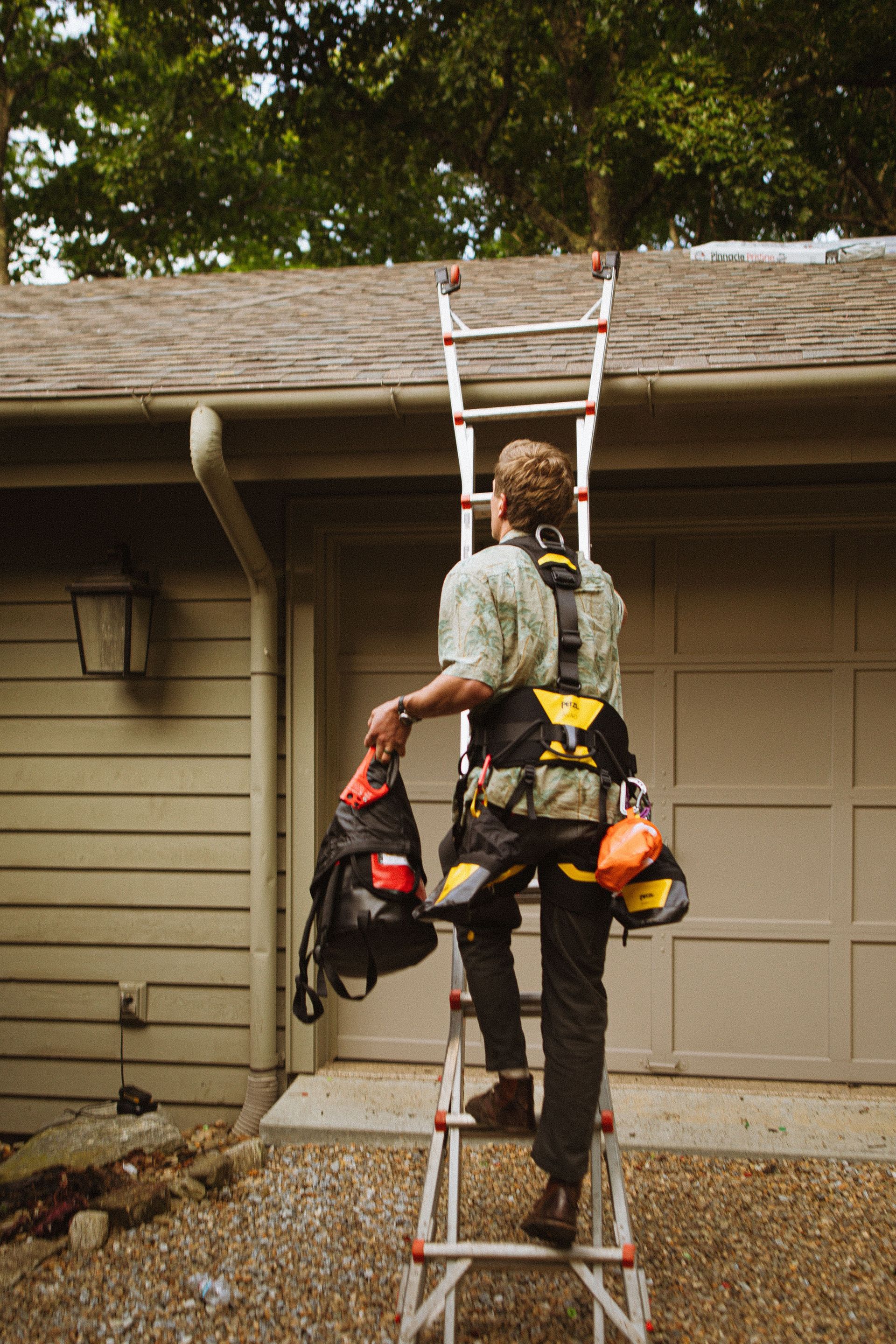
Drainage Systems That Protect Foundation and Siding
Gutter Installation & Repair in Berea for fascia rot, foundation erosion, and basement moisture caused by failing water management
Gutters channel thousands of gallons of runoff away from your home's foundation during Central Kentucky's heavy spring rains, preventing concentrated water discharge from eroding soil, saturating basements, and rotting wooden components where the roof meets exterior walls. Failed gutters show up as water cascading over edges during storms, soil trenches forming along the foundation, siding discoloration from constant splash-back, and fascia boards deteriorating from moisture exposure that wouldn't occur if drainage directed water into downspouts and away from the structure. Blue Collar Roofing installs seamless aluminum gutters formed on-site to exact measurements, eliminating the joints and seams where sectional systems leak, collect debris, and separate over time as thermal expansion stresses connections.
Seamless systems outperform sectional gutters by reducing failure points to corners and downspout outlets rather than having joints every ten feet where water seeps through compromised sealants. Proper sizing matters because undersized gutters overflow during heavy rainfall regardless of condition, sending water over edges exactly like failed systems, while correctly sized installations handle peak flow volumes by matching gutter capacity to roof square footage and regional rainfall intensity. Installation includes sloping gutters at precise gradients so water flows toward downspouts without pooling in low spots where debris accumulates and mosquitoes breed.
Request a gutter evaluation to assess whether your current system handles drainage effectively or requires replacement before foundation problems develop.
How Effective Gutters Change Water Management
Installation begins with removing deteriorated fascia boards if moisture damage has compromised structural integrity, replacing them with treated lumber before mounting gutter hangers that support the system's weight when filled with water. Seamless gutters are formed from continuous coils of aluminum using portable equipment positioned near the installation site, creating sections as long as the roofline without requiring joints that eventually leak. Downspouts discharge away from foundations using extensions that carry water at least six feet beyond the perimeter, preventing soil saturation in areas where basements and crawl spaces sit below grade.
Once new gutters function properly, you'll notice soil along foundations stays firm rather than washing into trenches, basement humidity drops because groundwater isn't pooling against walls, and siding remains clean since splash-back from ground impacts stops coating lower sections with mud and organic debris. Fascia boards last decades instead of requiring replacement every few years as moisture rot spreads from constant exposure to overflowing water.
Leaf protection systems using micro-mesh or solid covers with water-adhesion edges prevent debris accumulation that blocks flow and forces water over gutter edges during storms. Maintenance recommendations include seasonal inspections to confirm downspouts remain clear, hangers haven't loosened, and slope hasn't shifted from settling or hanger failure, though seamless systems require far less intervention than sectional alternatives constantly separating at joints.
Frequent Questions About Gutter Systems
Homeowners replacing or repairing gutters need to understand how proper installation prevents the foundation and moisture problems that failing systems cause throughout Berea properties.
Why do seamless gutters cost more than sectional systems?
Seamless gutters require specialized forming equipment brought to the job site and custom-fitted to exact measurements, but they eliminate the leak-prone joints that sectional systems rely on every ten feet, reducing long-term maintenance and extending functional lifespan significantly.
How do gutters prevent foundation damage?
Gutters collect roof runoff and direct it through downspouts to discharge points away from the foundation, preventing thousands of gallons from saturating soil directly adjacent to basement walls where hydrostatic pressure forces moisture through concrete and causes settling as soil erodes.
What causes gutters to pull away from fascia boards?
Hangers spaced too far apart allow gutters to sag under water weight, and fascia rot from prior water exposure weakens the attachment surface, causing fasteners to pull free when the system fills during heavy rain.
When should I replace gutters versus repairing sections?
Localized damage from fallen branches or separated downspouts warrants targeted repairs, while gutters showing widespread rust, multiple leaking joints, or significant sagging indicate the system has reached end-of-life and requires full replacement.
How does proper gutter sizing get determined?
Calculations account for roof square footage draining to each gutter section, regional rainfall intensity data for Berea, and roof pitch since steeper slopes concentrate flow more than shallow pitches, with standard residential gutters ranging from five to six inches depending on these factors.
Blue Collar Roofing installs drainage systems engineered for Central Kentucky rainfall patterns, preventing the foundation erosion and moisture intrusion that undersized or failing gutters allow. Schedule a complete gutter assessment to determine whether repair or replacement provides effective long-term water management for your property.